Every business handles data—but not every business knows how to protect sensitive client data effectively. And in today’s digital landscape, one small mistake can lead to massive consequences.
That’s why having a trusted, well-trained virtual assistant isn’t just a productivity boost—it’s a vital layer of protection.
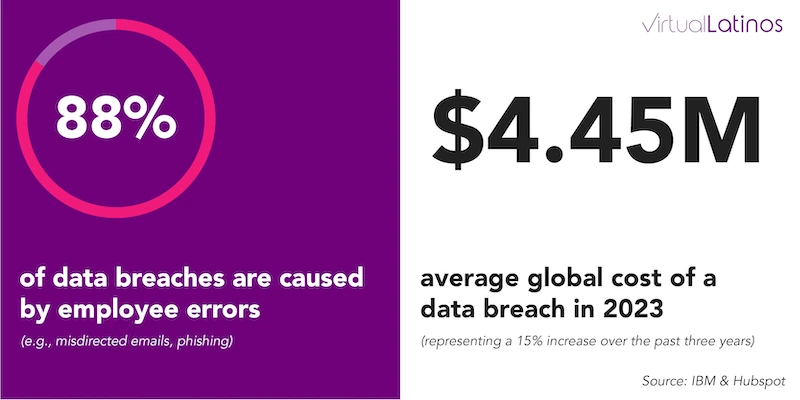
Consider this: in 2023, the average global cost of a data breach soared to $4.45 million, marking a 15% increase over the past three years, according to IBM. And while that number may seem like something only large corporations need to worry about, the reality is much closer to home.
A staggering 88% of data breaches are caused by employee errors—things like sending sensitive information to the wrong person or falling for phishing emails. These everyday slip-ups can happen to any team, in any industry, at any size.
That’s where Virtual Latinos (VL) virtual assistants come in. With the right training and security awareness, a VL VA can serve as your business’s first line of defense—helping you handle data securely, avoid common mistakes, and safeguard your clients’ trust.
Why Data Security Should Matter to Every Business Owner
You don’t have to run a tech company or a law firm to worry about protecting sensitive data.
If you’re storing emails, processing payments, handling phone calls with clients, or even just scheduling appointments, then you’re dealing with information that needs to be secured—whether you’re a solo entrepreneur or managing a growing remote team.
The reality is that small businesses are a prime target. In fact, 43% of cyberattacks are aimed at small businesses, yet only 14% are adequately prepared to defend themselves.
That gap puts countless business owners at risk—not just of financial loss, but of damaged reputations and broken client trust.
And the pressure is only increasing. By 2026, it’s estimated that 75% of the world’s population will have their personal data protected under modern privacy regulations, up from just 25% today.
That means the expectations around data privacy and compliance are getting stricter—and businesses that aren’t keeping up risk falling behind.
How to Procted Sensitive Client Data with Outsourcing
Outsourcing can be a game-changer for businesses looking to grow efficiently—but when you hand off tasks, you’re also handing over access to sensitive client data. That’s why knowing how to outsource securely is just as important as knowing what to outsource. One effective way to protect your data is by using a VPN, and Cybernews offers a detailed comparison of Nordvpn vs Protonvpn to help you choose a reliable option for secure remote work. When done right, outsourcing can actually strengthen your data security.
Whether your team is working on desktops, laptops, or mobile devices, having the right VPN ensures consistent protection across all platforms. For Android users, a trusted vpn for android can help keep sensitive client data secure even when working remotely.
When done right, outsourcing can actually strengthen your data security. Here’s how to protect data while benefiting from the flexibility and efficiency of working with outsourced team members like virtual assistants:
Work only with vetted professionals
Not all outsourcing partners are created equal. Look for providers that thoroughly vet their talent through background checks, skills assessments, and structured onboarding.
This not only ensures quality but also minimizes the risks of exposing sensitive information to unqualified or untrustworthy individuals.
Use secure communication and collaboration tools
Make sure all file sharing, internal messaging, and video calls happen over encrypted and secure platforms. Tools like Google Workspace, Slack (with enterprise-level settings), Zoom, and password managers like LastPass support secure workflows.
Enabling multi-factor authentication (MFA) adds an extra layer of protection when logging in—making it harder for attackers to gain access to sensitive data.
Limit data access based on roles
Following the principle of least privilege is key. Only grant access to systems and files that are strictly necessary for each task. For instance, a VA handling social media doesn’t need access to your CRM. This role-based limitation helps you protect information by reducing the chances of accidental exposure.

Identify sensitive data from the start
Before outsourcing, take time to identify sensitive data within your systems—whether it’s client records, payment details, or internal reports. Label and classify this data clearly, so your VA understands what’s confidential and how it must be handled. Additionally, consider implementing a password manager for your team to securely manage who has permission to view this classified information.
Set clear policies and expectations
During onboarding, provide detailed yet easy-to-follow guidelines for handling sensitive information. These should cover:
- What qualifies as sensitive or confidential
- How to securely store and transfer files
- Which communication tools to use
- What to do in case of suspicious activity or a potential breach
Having your VA sign an NDA (non-disclosure agreement) also adds legal reinforcement to your expectations around data security.
Keep all software updated
One of the most overlooked ways to protect sensitive client data is simply keeping systems and tools updated. Outdated software often contains vulnerabilities that hackers can exploit. Encourage your VA to activate auto-updates across devices and applications, whether it’s productivity tools or security apps like a vpn for android apk, and to regularly check for the latest security patches.
Monitor activity and encourage transparency
Use tools like Google Activity Logs, Dropbox audit trails, or HubSpot user monitoring to keep track of who accesses what. Monitoring helps detect threats early and builds a culture of accountability. Encourage your VA to flag anything unusual immediately, so you can act before issues escalate.
Outsourcing doesn’t mean giving up control—it means gaining support. With the right tools, policies, and trusted professionals in place, you can confidently delegate work and still protect sensitive client data across your entire operation.
The Hidden Risks of Not Taking Data Security Seriously
Let’s get real for a second: not investing in data protection and better data security can lead to more than just fines. It can damage your brand’s reputation, result in legal consequences, and make your clients think twice about working with you.
Here’s what can go wrong if sensitive data—including encrypted data or information stored on mobile devices—is mishandled:
- Client trust is lost: Once existing data is exposed or accessed without permission, it’s almost impossible to win trust back.
- Unauthorized access: Weak protocols leave your systems vulnerable, making it easier for hackers to compromise and access data processing systems.
- Regulatory penalties: Depending on your industry, you could face steep fines for not protecting your digital assets.
- Productivity drops: Recovering from a data breach takes time—time you could be using to grow your business.
Don’t let preventable mistakes put your company at risk. Prioritizing data security today means protecting your clients and your growth for tomorrow.
How VAs Are Trained to Protect Sensitive Client Data
When hiring virtual assistant, it’s crucial to understand how they’re trained and what tools their service providers use to ensure data protection.
Every reputable virtual assistant agency should treat data security as a top priority, providing comprehensive training focused on information security, compliance with data protection regulations, and best practices for handling sensitive data.
Here’s how well-trained VAs help protect sensitive client data every day:
They rely on updated software and tools
Using outdated platforms is one of the easiest ways to create vulnerabilities. That’s why well-trained VAs work only with secure, up-to-date software for CRMs, communication, and data processing—activating auto-updates and sticking to encrypted systems whenever possible.
They implement proven security measures
Technology alone isn’t enough. To prevent unauthorized access, virtual assistants adopt strong security habits, including:
- Using VPNs to protect internet traffic
- Creating complex, regularly updated passwords
- Sharing only encrypted data
- Avoiding unsecured public Wi-Fi or using VPNs when needed
- Limiting access to mobile devices and sensitive platforms
These steps significantly lower the risk of data leaks or breaches.
They handle administrative tasks with care
Even simple tasks like answering emails or managing files often involve handling digital assets and existing data. Trained VAs know how to store and share information through protected environments and always follow global data protection protocols.
They communicate with discretion
Phone calls can be an overlooked threat to data privacy. Skilled VAs are trained not to share personally identifiable information over the phone unless proper verification protocols are in place. They’re also equipped to steer conversations away from sensitive topics when needed.
By combining secure tools, consistent habits, and ongoing education, virtual assistants play a vital role in safeguarding information. A well-trained VA isn’t just a productivity booster—they’re a key partner in your commitment to better data security.

FAQs About How Virtual Assistants Help Protect Sensitive Client Data
- Are Virtual Latinos VAs trained in information security?
Yes! VL provides guidance and resources to all VAs, including best practices for protecting sensitive data, using secure tools, and spotting red flags. - Can a VA prevent unauthorized access to my business systems?
While no system is 100% breach-proof, our VAs use security measures like strong passwords, 2FA, and VPNs to significantly reduce the risk of unauthorized access. - What tools do VL VAs use to handle data securely?
Common tools include Google Workspace, Trello, HubSpot, LastPass, and communication apps like Slack or Zoom—all configured with updated software and secure settings. - What industries benefit the most from data-secure VAs?
Healthcare, legal, financial services, e-commerce, and HR are just a few. But any business that handles client data can benefit from a VA who prioritizes information security.
Work Smarter, Grow Faster—And Protect Sensitive Client Data
You don’t need to choose between productivity and protection. With the right virtual assistant by your side, you can streamline your operations and keep your client information secure—every step of the way.
Let us help you find a virtual professional who’s not only talented and reliable, but trained to protect sensitive client data with care and confidence.
Ready to grow your business while protecting your sensitive client data?
Start your journey with a free consultation today.