Latin American culture thrives on connection, respect, and community—and this doesn’t stop at the office door.
If you’re looking to expand your team by bringing on talent from Latin America, it’s crucial to understand how these cultural values shape professional relationships.
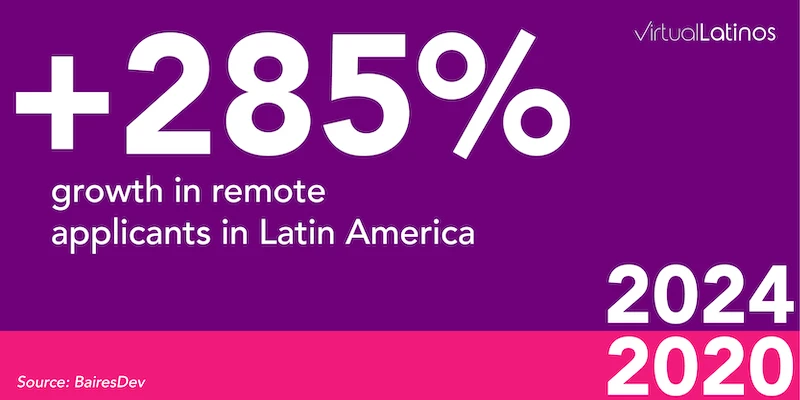
In fact, the number of remote applicants from Latin America has surged by 285% between 2020 and 2024, reflecting a booming demand for remote talent from the region. This growth isn’t by chance.
Factors like shared time zones with the U.S., high technical expertise, and strong English proficiency have made Latin American professionals especially attractive to international companies.
At the same time, the rise of remote work has transformed smaller cities across Latin America into emerging tech hubs—often called “Silicon Pueblos.”
Here, skilled engineers and professionals contribute to cutting-edge projects without ever having to relocate, strengthening local economies while enriching global teams.
From valuing personal bonds over purely transactional exchanges to embracing a more flexible view of time, Latin American professionals bring refreshing human elements to the workplace that can elevate your team’s cohesion, creativity, and sense of community.
Join us as we dive deeper into these cultural dimensions and explore practical ways to seamlessly integrate Latin American employees into your remote teams, building a work environment that thrives on mutual understanding and respect.
Key characteristics of Latin American professionals
Latin American talent bring a unique blend of cultural values to the workplace that significantly shape work dynamics—especially when collaborating with teams in the United States.
Understanding these key traits is essential for managing remote jobs effectively and building strong cross-border partnerships.
Here’s what typically stands out across many Latin American countries and cultures, where both the Spanish and Portuguese languages are widely used in professional settings.
Relationship-oriented work culture
- In many cultures in Latin America, personal relationships are at the heart of doing business.
- Building trust and rapport is often a prerequisite for professional success—quite different from the U.S., where interactions can be more transactional and efficiency-focused.
- For managers of remote professionals, investing time to genuinely know your team fosters loyalty and long-term collaboration.
Respect for hierarchy balanced with innovation
- Latin American workplaces often show clear respect for authority and structured hierarchies.
- However, this doesn’t limit creativity. Professionals here are proactive, eager to share ideas, and frequently pursue innovation.
- Unlike the flatter structures common in many U.S. companies, understanding this balance helps leaders encourage open dialogue while still honoring formal roles.
Flexible perception of time
- Many Latin American teams operate on a polychronic view of time: multitasking is common, and deadlines are often seen as more flexible.
- This can contrast sharply with the monochronic, punctual approach typical in the U.S.
- For remote teams, it’s wise to set clear timelines while also allowing some flexibility to respect these cultural rhythms.
Strong sense of community and teamwork
- Colleagues frequently become like extended family, driving collaboration and loyalty.
- This communal approach offers a warm counterbalance to the U.S. emphasis on individual achievement.
- U.S. managers can leverage this by promoting team-building initiatives that strengthen shared responsibility.
High-context communication
- Professionals from Latin American countries often rely on indirect cues, reading between the lines, and interpreting non-verbal signals—known as high-context communication.
- By contrast, American business interactions tend to be low-context, expecting direct and explicit messaging.
- Recognizing these differences prevents misunderstandings and builds smoother interactions in remote jobs.
Clear value on work-life balance
- While conversations around work-life balance are growing worldwide, Latin American professionals typically place even greater emphasis on family time, holidays, and maintaining personal boundaries.
- Managers should keep this in mind when scheduling meetings or setting expectations for remote professionals.

Creative, adaptive problem-solvers
- Necessity has long driven innovation across Latin America, resulting in professionals who are resourceful and flexible.
- This adaptive mindset is a major asset, bringing fresh perspectives that complement the structured, process-heavy approaches often found in U.S. workplaces.
Open emotional expression
- Professionals across Latin American cultures generally show more emotion at work than is typical in the U.S., whether it’s enthusiasm, pride, or even frustration.
- Embracing this can deepen trust, reveal motivations, and create stronger human connections, which are critical for success in distributed teams.
By understanding these cultural characteristics—rooted in Latin American culture, the Spanish language, and shared histories—you can better hiring Latin American talent for your global workforce.
This makes your organization more adaptable, innovative, and truly connected.
Challenges faced by Latin Americans in remote settings
While remote jobs create exciting opportunities, they also bring unique challenges for professionals in Latin American countries.
Understanding these issues is key for U.S. companies hiring remote teams across different cultures in Latin America.
Connectivity and technology gaps
- Reliable internet and modern tech aren’t consistent across Latin America.
- Major cities in countries like Brazil and Costa Rica have strong infrastructure, but rural areas may still face unstable connections.
- This can impact productivity and daily communication with teams in the United States. Companies may need to help remote professionals upgrade their setups to ensure steady performance.
Balancing work-life boundaries
- Many professionals in Latin American cultures have a strong work ethic and often go the extra mile.
- However, remote work can blur the line between personal and professional life, especially in places where family ties are central.
- Clear policies help protect time for family and personal activities—essential for long-term engagement.
Managing time zone differences
- Remote teams across Latin America often adjust to U.S. schedules, and time zone which can mean early starts or late evenings.
- Overlapping with U.S. East Coast or West Coast teams can lead to longer workdays.
- Building flexible schedules respects personal time while still supporting collaboration.
By recognizing these challenges—and adapting to support employees across the Spanish and Portuguese-speaking regions—businesses can make remote jobs more sustainable.
This not only helps attract top talent but also strengthens teams that span multiple Latin American countries, the United States, and beyond.

Best practices for US businesses managing remote Latin American teams
Successfully managing remote Latin American teams requires thoughtful approaches tailored to the unique cultural nuances and communication styles prevalent in each country and the region.
Here are some effective strategies that U.S. businesses can implement to enhance their management practices and collaboration efforts.
Effective cross-cultural communication
- Language and Non-Verbal Cues: Ensure that all communications are clear and consider the potential language barriers. While English may be the business language, offering materials or key communications in Spanish or Portuguese can prevent misunderstandings. Pay attention to non-verbal cues in video meetings, as Latin Americans often convey much through their expressions and gestures.
- Regular Check-ins: Maintain frequent communication through regular check-ins, not just about work but to foster a genuine connection. These interactions help bridge the physical distance and create a rapport that mimics in-person office dynamics.
- Cultural Training: Provide cultural training for your teams to help them understand each other’s backgrounds and work styles better. Highlight specific Latin American trends and social norms to equip your U.S. employees with the knowledge to interact respectfully and effectively.
Building and maintaining trust remotely
- Transparency: Operate with transparency by sharing company updates, changes, and decisions openly. This builds trust and ensures that team members feel valued and integral to the company.
- Empowerment: Empower employees by entrusting them with responsibilities and showing confidence in their capabilities. Recognition of their contributions can enhance their commitment and trust in the organization and leadership.
- Consistency: Be consistent in your interactions and how you manage the team. Consistency in behavior and policies assures team members that they are all well being and in a stable and reliable working environment.
Adapting management styles to fit Latin American cultural contexts
- Respect for hierarchy: While encouraging a more collaborative approach, understand and respect the cultural emphasis on hierarchy and formality common in Latin America. Structure interactions and decision-making processes in a way that acknowledges these preferences.
- Personalized interaction: Tailor your management approach to be more personable. Latin Americans typically appreciate a more person-centered approach, which involves showing interest in them as individuals, not just as employees.
- Flexibilit:y Show flexibility in deadlines and work arrangements, understanding the polychronic nature of Latin American cultures. This flexibility helps accommodate the natural work rhythm and can lead to higher productivity and satisfaction.
Tools and technologies to aid remote collaboration
- Communication platforms: Utilize robust communication tools like Slack, Microsoft Teams, or Zoom that support instant messaging, video calls, and file sharing to keep everyone connected regardless of location.
- Project management software: Implement project management tools like Asana, Trello, or Monday.com that help organize tasks, deadlines, and progress updates in a transparent and accessible manner.
- Time zone management: Use tools like World Time Buddy or Google Calendar’s world clock feature to plan meetings that consider all team members’ time zones, minimizing disruptions to their work-life balance.
By integrating these best practices, U.S. businesses can effectively manage and maximize the productivity of their remote Latin American teams, fostering a cooperative and harmonious work environment that respects cultural differences and promotes mutual growth.
Frequently Asked Questions
What are the key cultural traits of Latin American workers?
Latin American workers often exhibit a relationship-oriented approach to work, emphasize respect for hierarchy, value flexibility with time, and maintain a strong sense of community and teamwork.
How can U.S. companies effectively communicate with remote Latin American teams?
Effective communication with Latin American teams involves regular check-ins, the use of clear and inclusive language, cultural training for all team members, and the strategic use of visual and non-verbal cues in communications.
What are common challenges faced by remote Latin American employees?
Common challenges include varying levels of access to technology and reliable internet, difficulties in maintaining a work-life balance due to different cultural values, and managing time zone differences.
How can U.S. businesses build trust with their Latin American remote employees?
Building trust can be achieved by maintaining transparency in company operations, consistently recognizing and valuing employees’ contributions, and showing genuine interest and respect for their personal and professional growth.
What management style works best with Latin American employees?
A management style that respects the cultural emphasis on hierarchy while encouraging open communication and feedback is effective. Additionally, personalizing interactions and showing flexibility in work arrangements align well with Latin American cultural expectations.
What tools help in managing remote teams across Latin America?
Tools that aid in effective management include communication platforms like Slack or Zoom, project management software such as Asana or Trello, and time zone management tools to help schedule meetings that are convenient for everyone.
How can U.S. businesses adapt to the flexible time perceptions of Latin American workers?
U.S. businesses can adapt by setting clear expectations regarding deadlines while allowing for some flexibility. Understanding the polychronic nature of time in Latin American cultures helps in planning and scheduling work that accommodates different working styles.
What benefits do U.S. companies gain by embracing cultural diversity in their remote teams?
Embracing cultural diversity brings benefits such as enhanced creativity, broader perspectives in problem-solving, improved employee satisfaction, and stronger competitiveness in the global market.
Build Global Teams with Latin American Culture
Understanding latin american work culture isn’t just about bridging differences—it’s a strategic advantage.
From relationship-driven trust to creative, flexible problem-solving, Latin American professionals bring qualities that can elevate your team’s performance, cohesion, and global perspective.
When you embrace these cultural strengths, you don’t just fill remote jobs—you create a work environment that’s more adaptable, innovative, and deeply connected.
Whether you’re managing projects across Latin American countries, collaborating in Spanish and Portuguese, or aligning teams with your offices in the United States, integrating this cultural awareness pays off in long-term loyalty and outstanding results.
Ready to harness the power of Latin American work culture?
Connect with Virtual Latinos to find dedicated, skilled talent who will bring energy, creativity, and authentic community spirit to your business.
Get a free call now and discover how easy it is to build your next high-performing team with top-tier professionals from Latin America.