As the way we work changes, society changes along with it. Rapid digitalization in recent years has brought about significant shifts in remote workforce. It’s essential to acknowledge that the global remote workforce has played a major role in driving these changes.
The workforce has reshaped how organizations think and operate by embracing technological advancements, transforming leadership approaches, and innovating production methods, all while preserving a human touch.
As companies increasingly prioritize productivity and efficiency in the digital work environment, they must also adapt to maintaining a motivated and engaged workforce.
This adaptation involves responding to generational shifts, resulting in benefits like increased flexibility, evolving leadership mindsets, and a stronger emphasis on balancing personal and professional life.
The connection between industry and the workforce highlights their mutual dependence. Both sides influence and rely on each other to achieve their goals, driving innovation and the adoption of new technologies. This interdependence enables both industry and the workforce to grow and evolve together.
Where are we headed? This critical question guides us in gaining a competitive edge and determining the right path forward. This article will explore the key elements of the recent mindset shift and explain why it stands as one of the most significant transformational pillars in recent years, along with its benefits for the industry.
The Shift from Traditional Workplaces to Hybrid Models
For years, remote work was overshadowed by myths questioning its effectiveness. Many believed working from home would lower productivity, hinder communication and collaboration, and isolate employees, ultimately weakening their sense of community and belonging.
Years later, in a post-pandemic world, the skepticism surrounding remote work has evolved into a recognized asset, fueling the transition from traditional on-site work to increasingly hybrid and remote models.
Studies from Stanford University reveal that remote workers can be 13% more productive than their in-office counterparts. Consequently, hybrid work models that blend remote and in-office work are becoming the norm.
According to a Gartner survey, 82% of company leaders plan to allow remote work at least part-time. This shift enhances flexibility and provides a competitive edge in attracting global talent.
Companies save an average of $11,000 annually for each employee who works remotely half-time, mainly due to reduced office space requirements and related costs. This significant cost reduction drives the shift from traditional on-site work to increasingly hybrid and remote work models.
The Role of Technology and AI in Remote Work
Technology, especially AI and automation, is pivotal in driving the global remote workforce. According to McKinsey & Company, companies that integrate AI into their operations could experience up to 40% productivity boosts.
AI tools improve communication, efficiently manage workloads, and predict employee burnout, making them essential for effective global team management.
These changes have impacted industries in various ways:
- Enhancing communication and collaboration: AI-driven tools like Slack and Microsoft Teams streamline communication across global teams by prioritizing important messages and minimizing information overload.
- AI in workflow management and productivity: Platforms like Trello and Asana leverage AI to automate tasks, optimize workflows, and anticipate project bottlenecks, which can lead to a productivity increase of up to 40%.
- Predicting and mitigating employee burnout: AI tools monitor employee engagement and can predict burnout, enabling proactive interventions to maintain productivity and well-being.
- AI and the future of work: As AI continues to evolve, it will increasingly shape the management of global remote teams, with future advancements further enhancing both productivity and collaboration.

How The Generational Shift Impacts the New Work Models
The global workforce is changing, with Millennials and Gen Z leading. They are reshaping traditional work models by emphasizing flexibility, digital integration, and a more balanced approach to life and career.
- Demand for flexibility: Younger generations prioritize flexibility much more than before. A study by PwC reveals that 64% of Millennials want the option to work from home occasionally, and 41% prefer a flexible schedule over a fixed one.
This growing preference drives the shift toward hybrid work models, allowing employees to choose when and where they work.
- Technological savvy: Millennials and Gen Z, having grown up with technology, are naturally skilled at using digital tools and platforms. This familiarity reduces the learning curve for adopting new technologies, such as AI and collaboration tools, which are crucial in remote and hybrid work environments.
Deloitte’s Global Millennial Survey indicates that 75% of Millennials believe technology enhances workplace productivity.
- Focus on work-life balance: These younger generations emphasize work-life balance more than previous ones, resulting in an increased focus on mental health initiatives and flexible work arrangements.
The World Economic Forum reports that Gen Z, in particular, is less willing to sacrifice personal time for work and more likely to seek employers who balance work and personal life.
The growth of Latin American virtual assistants
The rise of the global remote workforce has fueled the growth of virtual assistants (VAs), becoming increasingly vital to businesses across various industries.
Latin American professionals, who now make up nearly 20% of virtual assistants worldwide, significantly impact this talent pool. U.S. companies are increasingly tapping into the potential of these highly skilled, tech-savvy individuals from the region.
Latin American virtual assistants are helping companies save on costs while injecting innovation and energy into their teams. Here are the key benefits that Latin American VAs bring to the table:
- Cost-effectiveness: VAs typically work freelance or part-time, reducing the need for full-time salaries and benefits. Hiring virtual assistants can reduce a company’s operational expenses by 78%.
- Scalability: Virtual assistants offer scalability, allowing businesses to quickly adjust their workforce based on current needs without the commitment of long-term employment contracts.
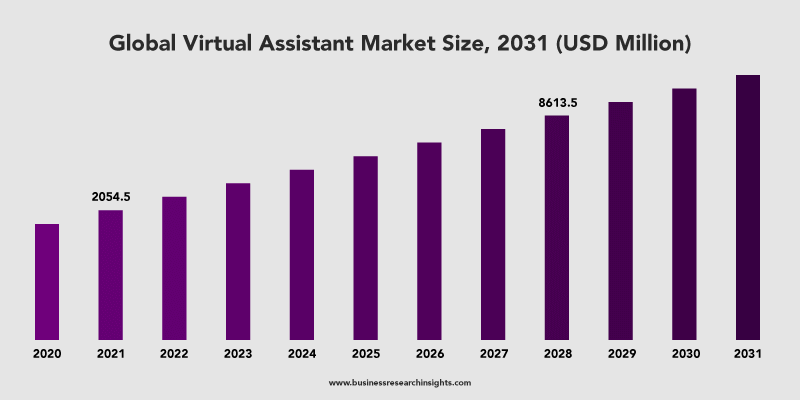
- Access to global talent: VAs’ remote nature allows businesses to access a global talent pool, ensuring they can find the best skills and expertise regardless of geographical location. Statista reports that the global market for virtual assistants is expected to grow from $2.3 billion in 2020 to $6.3 billion by 2025, reflecting their increasing importance in the global economy.
- Increased efficiency: VAs enable companies to delegate routine tasks, allowing core team members to focus on strategic initiatives. This division of labor improves overall efficiency and productivity as VAs handle time-consuming tasks like scheduling, customer service, and data entry.
- Cultural compatibility: Latin America and the U.S. share many cultural similarities. Their shared values and comparable business practices contribute to smoother communication and easier integration, enhancing cultural alignment and shortening the onboarding process for new hires.
Final Toughts
As the global workforce continues to evolve, it’s clear that traditional mindset work models are being redefined by the dynamic shifts brought about by remote and hybrid work arrangements.
This transformation is about where work gets done and how it’s approached, with a growing emphasis on flexibility, diversity, and innovation. U.S. companies that embrace these changes are better positioned to thrive in a rapidly changing business landscape.
Latin American virtual assistants are at the forefront of this shift, offering cost-effective solutions and a deep well of creativity, technical expertise, and cultural alignment.
Their integration into your team isn’t merely an operational decision—it’s a strategic move toward a more agile and globally competitive organization.
By leveraging the unique strengths of Latin American VAs, you’re enabling your company to adapt quickly, innovate continuously, and stay resilient in the face of global challenges.
At Virtual Latinos, we’re committed to helping you harness this potential by connecting you with a top-tier global remote workforce ready to make an impact. Don’t let the opportunity pass by—partner with Virtual Latinos today and empower your business with the best remote talent Latin America offers.