| TL;DR |
|
You are in court when the phone rings. You are drafting a motion when an email pops up. You are meeting a client when a new lead submits an intake form. As a solo attorney, you handle all client communication, and it pulls you in every direction.
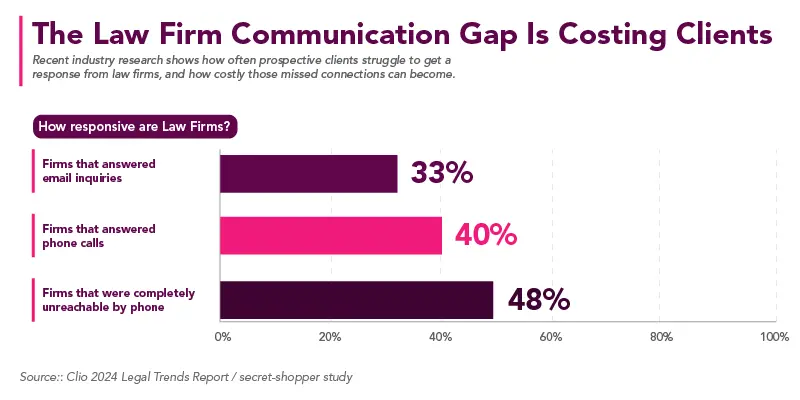
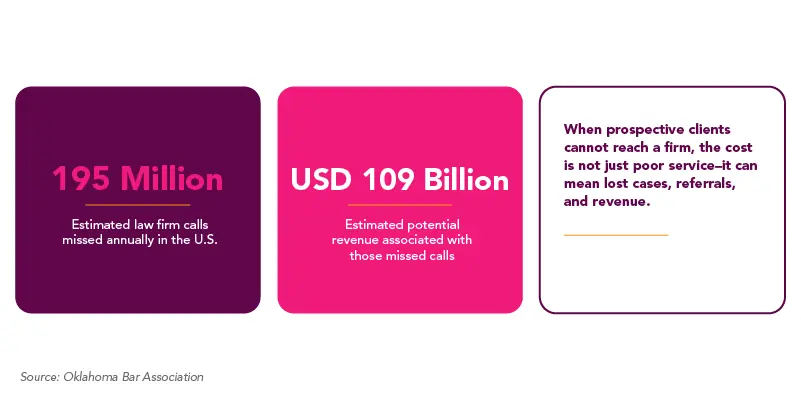
The numbers tell a frustrating story. A Clio 2024 secret-shopper study found that only 33% of law firms answered email inquiries, only 40% answered the phone, and 48% were completely unreachable by phone. Meanwhile, the Oklahoma Bar Association reports that U.S. firms miss roughly 195 million calls per year, representing approximately USD 109 billion in lost revenue. For a solo practice, every one of those missed calls is a client who chose someone else.
Let’s dive into how to fix attorney-client communication without adding hours to your day or hiring a full-time receptionist. You will learn why communication breaks down, what it costs you, and how a virtual legal assistant can make client communication effortless.
Why You Struggle to Keep Up With Client Communication
You know communication matters. So why does every client call feel like an interruption? The answer lies in the structure of solo practice itself. You are not failing at communication because you do not care. You are failing because you are one person doing the work of five.
You are the entire team
When you are the attorney, the receptionist, the billing department, and the paralegal, something has to give. Most days, it is responsiveness. You cannot return phone calls while you are taking depositions or reviewing discovery. You are the only one, and the phone does not stop ringing just because you are in the middle of a hearing.
Client expectations keep rising
Today’s clients compare your responsiveness to every other service provider in their life. They expect fast replies, clear updates, and answers on their schedule. When you take 48 hours to respond to an inquiry, they have already contacted three other firms and often signed with one of them.
You cannot be available around the clock
Evenings, weekends, and court days leave gaps in your availability. Prospective clients calling after hours often reach voicemail and never call back. You lose the case before you even know they were interested.
The timing problem is worse for practice areas with emergency situations. A personal injury victim calling from the hospital at 9 PM is not going to leave a message and wait until Monday. They need someone to answer now. If that someone isn’t you, it’s your competitor.
Administrative work compounds the problem
Every hour you spend on intake paperwork, scheduling, and payment follow-ups is an hour you cannot spend on legal work or client calls. The administrative burden multiplies your communication bottleneck. You end up in a cycle where the tasks pile up, you work late to catch up, and you still fall behind on responding to the messages that came in while you were working.
For solos without support staff, administrative communication can eat much of your week. That is time you are not billing, and it is time you are not using to bring in new business.
No system catches what you miss
Without a dedicated person or process, inquiries slip through the cracks. The email that arrived during a hearing stays buried. The lead who called twice and got voicemail moves on. You never see what you are losing because you don’t know it exists.
How Poor Client Communication Hurts Your Practice
The cost of slow or inconsistent communication goes beyond a missed opportunity. It hits your revenue, your reputation, and your license.
Losing clients and referrals
A prospective client who reaches your voicemail does not leave a message and try again. They call the next firm on the list. When Clio secret-shopped nearly 500 firms, only 40% even answered the phone, so most of those callers ended up somewhere else. And when your current clients feel ignored, they do not refer their friends. That referral pipeline dries up quietly.
The math is simple. If you miss five leads per month because you could not pick up the phone, and even one of those leads would have converted into a USD 10,000 case, you are losing USD 10,000 in revenue every month. Over a year, that adds up to USD 120,000 in unrealized fees.
Referrals follow the same pattern. A client who felt informed and cared for throughout their case tells their friends about you. A client who spent weeks waiting for a callback does not. Word of mouth is free marketing, but only if you give clients something good to say.
More complaints and negative reviews
Clients rarely complain about losing a motion. They complain about not knowing what happened. Unanswered questions, missed callbacks, and surprise invoices turn into one-star Google reviews. In a reputation-driven profession, those reviews follow you for years.
A single negative review can cost you multiple clients. Prospective clients Google your name before they call you. If the first thing they see is a review about poor communication, they move on. Building a five-star reputation takes years. One angry client can damage it in an afternoon.
The ethics and malpractice risk under Rule 1.4
Client communication is not just good practice. It is a professional obligation. ABA Model Rule 1.4 requires attorneys to keep clients reasonably informed about the status of their matters and to respond promptly to reasonable requests for information.
The consequences for falling short are real. According to the ABA, the top two disciplinary complaints against lawyers are neglect and lack of communication. The Washington State Bar emphasizes that failing to keep clients reasonably informed is an ethics violation regardless of intent. You do not have to mean to ignore a client. You just have to get busy enough for it to happen.
For solo attorneys, this is an acute risk. You have no buffer. When you are in trial for a week, every other client’s call goes unanswered unless you have built a system to handle it. A bar complaint can derail your career. A malpractice claim can end it. Neither is worth the cost of an unanswered phone.

Lost billable hours and revenue
Every minute you spend on administrative communication is a minute you are not billing. But the bigger hit is what you never capture at all.
The Oklahoma Bar Association calculates that U.S. firms collectively miss approximately 195 million calls per year, worth roughly USD 109 billion in potential revenue. For a solo, even one missed personal injury consultation could represent tens of thousands of dollars in fees. You cannot recover revenue from a lead who never became a client.
Consider the opportunity cost another way. If your billable rate is USD 350 per hour and you spend 10 hours a week on communication tasks that a trained assistant could handle, that is USD 3,500 in lost billable time every week. Over a month, the number grows to USD 14,000. A virtual assistant costs a fraction of that while also capturing the leads you would have missed.
What Effective Law Firm Client Communication Actually Looks Like
Good law firm client communication is not about being available 24 hours a day. It is about setting clear expectations and meeting them consistently. When clients know what to expect and you deliver on those expectations, trust builds, and complaints disappear.
Start by defining your communication policy at intake. Tell clients how you will communicate (phone, email, client portal), how quickly you aim to respond (same business day, within 24 hours), and who they should contact for routine questions. When everyone understands the rules, there are fewer surprises.
Beyond the policy, effective attorney-client communication rests on five pillars.
Clarity
Say what you mean in language clients understand. Avoid unnecessary jargon. If you must use a legal term, explain it in plain English immediately afterward. Clients who feel confused feel ignored.
Consistency
Use the same channels and cadence every time. If you promise weekly case updates on Fridays, deliver them every Friday. Consistency builds trust faster than speed. Clients learn to expect your message and stop calling to ask for updates because they know one is coming.
Timeliness
Respond to inquiries promptly, even if only to acknowledge receipt and promise a fuller answer soon. A quick reply that says you are on it reassures a client more than silence followed by a detailed response three days later.
Set internal standards for response times. Reply to every lead inquiry within one hour during business hours. Acknowledge every client email within one business day. With a system for timeliness, nothing falls through the cracks.
Confidentiality
Use secure communication channels for sensitive information. Remind clients not to share privileged details over text or social media. Protecting confidentiality is both an ethical duty under Rule 1.6 and a trust signal that shows you take their case seriously.
When working with a virtual assistant, ensure they understand your confidentiality protocols. Train them on what can be discussed over email versus what requires a phone call or encrypted channel. The right assistant will treat confidentiality as seriously as you do.
Documentation
Keep written records of every significant communication. Emails, notes from phone calls, and portal messages protect you if a dispute arises and help you pick up where you left off months later. Documentation is also essential for Rule 1.4 compliance, proving that you kept the client informed.
How a Virtual Assistant Makes Law Firm Client Communication Effortless
A virtual assistant for law firm client communication does what you cannot: be available when you are not. But the value goes far beyond answering phones. Here is what a virtual legal assistant does for a solo law firm. When you work with a trained legal virtual assistant, you gain a dedicated team member who handles the communication tasks that eat your time, so you can focus on practicing law. You can hire a legal virtual assistant built for exactly this.
Faster response times and speed to lead
Speed to lead is everything in legal intake. A Hennessey Digital study of 1,400 law firms found that the median response time to online leads was 13 minutes, but 27% of firms never responded at all. The firms that answer first win the client.
A virtual assistant monitoring your intake channels can respond within minutes, even while you are in court or on another call. They acknowledge the inquiry, gather preliminary information, and schedule a consultation, keeping the lead warm until you are ready to talk. A virtual assistant monitoring your intake channels can respond within minutes, even while you are in court or on another call.
They acknowledge the inquiry, gather preliminary information, and schedule a consultation, keeping the lead warm until you are ready to talk. For small law firms, fast lead response can be a competitive advantage when prospective clients contact multiple firms at once.
Never miss an after-hours or overflow call
Prospective clients do not only call between nine and five. When your phone rings at seven in the evening, a virtual assistant in a U.S. time zone can answer it. They take the message, qualify the lead, and schedule the callback for the next morning. The client feels heard instead of ignored, and you do not lose the case to a competitor who happened to pick up.
Overflow coverage matters during the business day too. When you are on another call and a new lead rings in, your assistant picks up instead of sending them to voicemail. That warm handoff can be the difference between winning a client and losing them forever.
Bilingual client communication
If your practice area includes personal injury, immigration, or family law, you likely serve Spanish-speaking clients. A bilingual virtual assistant can communicate with those clients in their preferred language, handle intake in Spanish, translate documents, and make your firm accessible to a population many competitors cannot serve.
Virtual Latinos connects you with pre-vetted bilingual virtual legal assistants who work in U.S. time zones. Offering bilingual coverage sets your solo firm apart without the cost of a local hire.
This is more than a convenience. For clients with limited English proficiency, communicating in their native language builds trust and reduces misunderstandings. Cases move faster when no one is struggling to translate.
Appointment scheduling and follow-ups
Scheduling consults and managing your calendar takes more time than you think. A virtual assistant handles booking, confirmations, reminders, and rescheduling. They follow up with leads who did not respond and re-engage clients who missed appointments. You stop playing phone tag and start showing up to meetings that are actually on your calendar.
Clear, consistent case updates
Clients want to know what is happening with their case, but you do not have time to call 20 people every Friday. A virtual assistant can send status updates via email or client portal on your behalf. They follow a template you approve, so the communication stays consistent and professional. Clients feel informed, and your phone stops ringing with update requests.
Regular updates also reduce anxiety. When clients know they will hear from your office every week, they stop worrying that something is wrong. The silence that used to create panic becomes expected downtime between updates.
Client intake and onboarding
The legal client intake process sets the tone for the entire relationship. A virtual assistant can guide new clients through paperwork, collect documents, enter data into your practice management system, and make sure nothing falls through the cracks. When clients experience a smooth onboarding, they start the relationship with confidence in your firm.
Billing and payment communication
Chasing invoices is awkward and time-consuming. A virtual assistant handles payment reminders, answers billing questions, sets up payment plans, and follows up on overdue accounts. They keep the collections conversation professional and off your desk, so you can focus on legal work instead of accounts receivable.
Keeping client information organized and secure
A virtual assistant maintains your CRM, updates contact records, and makes sure client information is accurate and accessible. They work within your secure systems and follow confidentiality protocols. You get an organized, up-to-date database without doing the data entry yourself.
The Tools Behind Effortless Client Communication
Technology alone does not fix communication problems. The right tools, paired with a trained person to run them, do. That combination is part of how virtual legal assistants support modern law firms, connecting technology with the day-to-day coordination that keeps client communication moving.
Email and templated responses
Email remains the backbone of attorney-client communication. A virtual assistant manages your inbox, responds to routine inquiries using pre-approved templates, flags urgent messages, and ensures nothing sits unanswered for days. They can also draft custom responses for your review, saving you time without sacrificing personalization.
Templates speed up the process without making communication feel robotic. A well-written template for appointment confirmations, case status updates, or document requests keeps your messaging consistent and professional.
Client portals
Platforms like Clio, MyCase, and Lawmatics give clients a secure place to view case status, upload documents, and message your team. A virtual assistant monitors the portal, responds to messages, and keeps the experience seamless. Clients get the self-service access they expect from modern businesses, and you get fewer interruptions.
Portals also create an automatic record. Every message lives in one place, tied to the client file. No more searching through email threads to find an attachment.
Text and SMS communication
Many clients prefer texting. Tools like Lawmatics, Smith.ai integrations, or dedicated business SMS lines let you meet them where they are. Your virtual assistant can handle text responses the same way they handle email, ensuring quick replies without pulling you away from legal work.
Texting works especially well for quick confirmations, reminders, and time-sensitive updates. Clients open texts faster than emails, so important messages get seen.
CRM and intake software
A centralized system for leads and client data keeps everyone on the same page. Your virtual assistant enters new leads, updates records, and manages follow-up sequences so no opportunity is forgotten. The CRM becomes your single source of truth for every client relationship.
Intake software can automate parts of the process, sending forms to new leads, collecting signatures, and routing inquiries to the right person. Your assistant manages the system and handles exceptions that automation cannot.
Secure messaging
For sensitive communications, encrypted messaging or portal-based chat adds a layer of protection. A virtual assistant trained in confidentiality understands when to use these channels and when to move to email or phone. They follow your protocols and ask questions when the right channel is unclear.
The common thread is this: tools are only as good as the person operating them. A virtual legal assistant turns your tech stack from a collection of logins into a functioning client communication system.
What a Legal Virtual Assistant Costs vs. a Missed Call
Cost is the first question every solo attorney asks. Here is the math.
Virtual legal assistants at Virtual Latinos are billed at rates across three experience tiers:
- Entry Level: USD 11 to USD 13 per hour
- Mid Level: USD 14.5 to USD 18.5 per hour
- Expert Level: USD 20 or more per hour
Compare that to the cost of a missed lead. If a single personal injury consultation converts at an average case value of USD 15,000 to USD 50,000 in fees, one missed call can erase months of VA costs. The Oklahoma Bar reports that 73% of secret-shopper clients said they would not recommend the firms they contacted, largely because of poor responsiveness. Those clients went elsewhere, and so did their cases.
For solo firms, protecting those opportunities is part of a broader approach to profit stability, where flexible legal support helps preserve both client responsiveness and attorney capacity.
A legal virtual assistant also costs a fraction of a local hire. According to the U.S. Bureau of Labor Statistics, paralegals and legal assistants earn a median of about USD 61,000 a year, which works out to roughly USD 29 an hour before you add payroll taxes, benefits, and the time and cost of recruiting. A Virtual Latinos assistant delivers pre-vetted, bilingual coverage in your time zone at a lower hourly rate and with none of those added employer costs.
When you factor in the revenue a virtual assistant helps you capture, the ROI becomes clear. If your assistant helps you close even two additional cases per year, they likely pay for themselves several times over. The question is not whether you can afford a virtual assistant. It is whether you can afford to keep missing calls.
Ready to stop losing leads to slow responses? Book a free call and see how a legal virtual assistant fits your practice.

How to Hire a Virtual Assistant for Your Law Firm
Bringing on a virtual assistant does not have to be complicated. Follow these five steps to get started.
- Define the scope: List the specific tasks you want to delegate. Start with the communication bottlenecks that hurt most, whether that is answering calls, managing intake, or sending case updates. Be specific about hours, channels, and response expectations.
- Choose a pre-vetted source: Skip the job boards and freelancer marketplaces. A staffing partner like Virtual Latinos screens candidates for English fluency, role-specific skills, and cultural fit, saving you hours of interviewing unqualified applicants. Pre-vetting means you meet only candidates who have all that it takes.
- Interview for communication skills: During your interview, test how the candidate communicates. Ask them to explain a process, role-play a client call, or summarize a hypothetical case update. How they communicate with you is how they will communicate with your clients. Look for clear, confident, and professional communication.
- Establish clear protocols: Before day one, document how you want calls answered, emails handled, and intake processed. Set expectations for confidentiality, response times, and escalation. The more clarity you provide up front, the faster your assistant becomes effective.
- Start with a focused trial: Assign a specific set of tasks for the first 30 days. Review performance, give feedback, and expand responsibilities as trust builds. A good virtual assistant will become more valuable over time as they learn your practice and clients.
Key Takeaways
- Answer every client and lead fast, even when you are in court, so you stop losing cases to the firm that picked up first
- Protect your license and your reviews by meeting your Rule 1.4 duty to keep clients informed, without adding hours to your day
- Reclaim 10 or more hours a week by handing intake, scheduling, case updates, and billing questions to a trained legal virtual assistant
- Offer bilingual, after-hours coverage that most solo firms cannot staff locally, and win the clients your competitors miss
- Spend less than the cost of a local part-time hire while capturing the revenue a single missed call would have cost you
Frequently Asked Questions
How do lawyers communicate with their clients?
Lawyers communicate with clients through phone calls, email, text messages, client portals, and in-person meetings.
The mix depends on the type of case, client preferences, and the firm’s technology. Most attorneys use email for written updates and phone calls for more complex or sensitive discussions. Increasingly, law firms adopt secure client portals that let clients check case status, upload documents, and send messages in one place. Texting has also grown, particularly for quick scheduling confirmations or reminders. The key is choosing channels that are secure, accessible to the client, and documented for your records.
What is considered attorney-client communication?
Attorney-client communication is any exchange of information between a lawyer and a client related to the legal representation.
This includes phone calls, emails, text messages, video conferences, and in-person conversations about the case. It also extends to messages exchanged through client portals or practice management software. The attorney-client privilege generally protects these communications from disclosure, but only if the communication was made in confidence and for the purpose of seeking or providing legal advice.
Routine administrative exchanges, like scheduling, are typically not privileged. You should treat all client communications as potentially sensitive and use secure channels when discussing case details.
How can a virtual assistant improve my law firm’s client communication?
A virtual assistant ensures every client and lead gets a timely response, even when you are unavailable.
They answer calls and intake inquiries, schedule appointments, send case updates, and handle billing questions. A trained legal virtual assistant also keeps your systems organized, follows up with leads who did not respond, and ensures no inquiry slips through the cracks. For solo attorneys, a virtual assistant is the difference between losing a lead to voicemail and booking a consultation.
Are virtual legal assistants trained in confidentiality and legal ethics?
A professional legal virtual assistant understands that client information is privileged and must be protected. They follow the communication protocols you establish and know when to escalate sensitive matters. You should still provide training specific to your firm’s policies and bar obligations under Rule 1.6 (confidentiality) and Rule 5.3 (supervising non-lawyer assistants). The right assistant will take confidentiality seriously and treat it as a core responsibility, not an afterthought.
Make Client Communication Effortless
You became an attorney to practice law, not to spend your day chasing missed calls and explaining invoices. But for solo attorneys, client communication is the bottleneck that consumes hours and costs cases.
It does not have to be this way.
A legal virtual assistant gives you the coverage you cannot provide alone. Faster responses to leads. Consistent updates to clients. Bilingual, after-hours availability. Professional handling of intake, scheduling, and billing. All without hiring locally or stretching your schedule further.
Virtual Latinos connects you with pre-vetted, bilingual professionals who work in U.S. time zones and understand the demands of a law practice. You get a team member you can train, trust, and integrate into your operations for the long term.
Ready to stop being the bottleneck? Book a free call and discover how effortless client communication can be.