
Key Takeaways
- Role Definition: A Real Estate Virtual Assistant (REVA) handles administrative, marketing, and transaction support tasks remotely.
- Primary Benefits: Hiring a REVA increases productivity, lowers operational costs, and allows agents to focus on revenue-generating activities.
- Hiring Process: Success requires defining tasks, ensuring remote-readiness, conducting thorough screening, and implementing a solid onboarding plan.
- Sourcing Talent: You can hire via freelance platforms or specialized agencies like Virtual Latinos for pre-vetted, industry-experienced professionals.
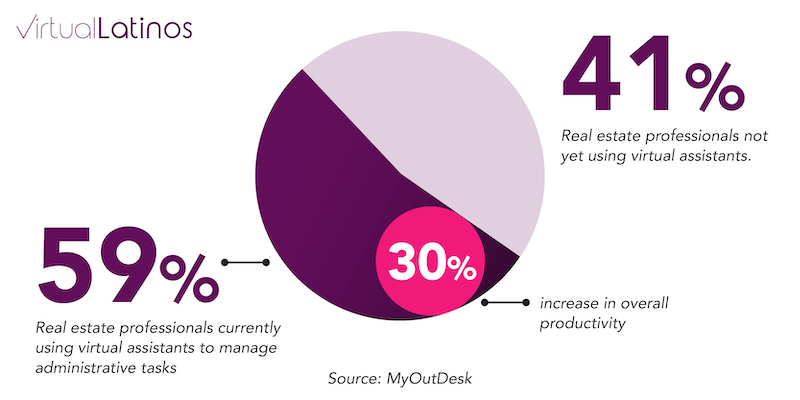
What Does a Real Estate Virtual Assistant Do?
A real estate virtual assistant (REVA) is a skilled remote professional who becomes your strategic partner, handling everything from client follow-ups to transaction coordination so you can focus on what actually closes deals and grows your business.
REVAs handle both routine admin and specialized work, the kind of tasks that eat up your day and keep you from closing deals and building client relationships.
A real estate virtual assistant (REVA) can take on tasks such as:
- Administrative tasks like data entry, managing your calendar, and email correspondence.
- Marketing duties, including social media management, creating property listings, and writing blog posts.
- Real estate transaction support, such as managing contracts, tracking deadlines, and communicating with clients and vendors.
- Lead management and ISA (Inside Sales Agent) duties, which involve following up on leads, qualifying prospects, and scheduling appointments.
Bottom line: A REVA takes over the day-to-day work that doesn’t need your personal touch, so you can spend your energy where it matters most.
Because REVAs work remotely, you save on office space and overhead, while gaining a skilled professional who delivers real results for your business.
How to Hire a Real Estate Virtual Assistant for Your Business
Hiring the right real estate virtual assistant isn’t just about offloading tasks, it’s about reclaiming your time, protecting your focus, and building a business that scales without burning you out.
Hiring the right real estate virtual assistant is an important step in increasing your productivity and driving the growth of your real estate business. Here’s a step-by-step guide to help you find the perfect fit:
1. Start with your list of tasks
The first step in the hiring process of a real estate virtual assistant is to define what you need help with. Start by auditing your week. Which tasks drain your time without moving the needle on revenue? Those are your delegation targets.
Drowning in calendar chaos? Spending hours chasing leads or posting on Instagram? A REVA steps in to streamline all of it, so you can get back to what you do best: closing deals.
Similarly, if you’re overwhelmed by data entry or the administrative side of real estate transactions, a virtual assistant can take on those responsibilities, freeing you to focus on more strategic activities.
Be specific about what you need. Look for someone who knows the industry, someone fluent in real estate terminology, transaction workflows, and client communication.
2. Ensure your business is remote-ready
Before you bring on a REVA, make sure your business is remote-ready. The right tools and systems will set both of you up for success from day one. Here are some steps to ensure your business is ready:
- Asynchronous communication: Tools like Slack, Trello, and Asana are essential for managing projects and ensuring that everyone, including your virtual assistant, stays aligned, no matter where they’re located.
- Cloud storage: Services like Google Drive, Dropbox, or OneDrive will allow your VA to securely access and share documents related to client communications or property management.
- Synchronous communication: Video conferencing tools like Zoom are important for real-time communication, especially when discussing real estate transactions, client needs, or collaboration with other parties involved.
With the right systems in place, delegation becomes seamless, and your REVA can hit the ground running.
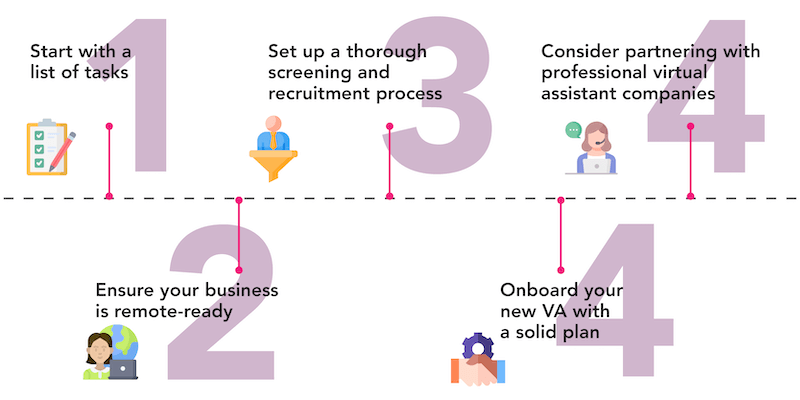
3. Set up a thorough screening and hiring process
When you’re ready to hire, don’t rush it. A solid recruitment process is your best defense against costly mismatches.
You could search freelance platforms like Upwork or Fiverr, but without a rigorous vetting process, you risk hiring someone who doesn’t truly understand real estate workflows or client expectations.
Here’s a suggested approach:
- Create a job description: Outline the tasks the virtual assistant will need to handle, the required skills, and any relevant real estate industry experience.
- Review resumes and portfolios: Look for candidates with experience working with real estate agents or real estate companies.
- Conduct interviews: Use video calls to assess their communication skills, responsiveness, and cultural fit. Ask specific questions about their experience in client communications, real estate terminology, and virtual work.
- Test their skills: Give your final candidates a small, paid test task to evaluate their abilities, especially in administrative tasks or social media management.
A thorough recruitment process doesn’t just improve your odds, it ensures you find a REVA who’s reliable, experienced, and ready to become a true partner in your growth.
4. Onboard your new virtual assistant with a solid plan
Hiring is just the beginning. How you onboard your REVA will determine how quickly they become a high-impact member of your team.
Strong onboarding means your REVA understands not just what to do, but how you work, what you value, and how to represent your brand with confidence. A strong onboarding plan includes:
- Introduction to your business: Explain what your real estate business does, your values, and your target market.
- Training on tools and software: Provide tutorials on how to use your communication tools, CRM system, and project management tools.
- Clarify expectations: Set clear goals, timelines, and key performance indicators (KPIs) for the tasks you need assistance with.
- Regular check-ins: Schedule weekly or bi-weekly check-ins to monitor progress, provide feedback, and ensure everything is going smoothly.
Done right, onboarding transforms your REVA from a new hire into a trusted partner, fast-tracking results and building a foundation for long-term collaboration.
5. Consider partnering with a professional virtual assistant company
If you want to skip the trial-and-error and work with pre-vetted, real estate-savvy professionals from day one, partnering with a specialized VA company is your smartest move. These companies specialize in recruiting, training, and vetting skilled assistants, and they can help you find experienced real-state virtual assistants.
When you partner with a specialized VA company, you’re not just hiring help, you’re gaining a vetted professional who’s already trained, tested, and ready to deliver results from day one.

Real Estate Virtual Assistant FAQs
What does a real estate virtual assistant do?
A virtual assistant takes routine work off your plate so you can focus on closing deals. Typical tasks include:
- Updating listings in the MLS and on sites like Zillow or Realtor.com
- Screening and nurturing leads by email, SMS, or phone
- Managing your calendar, inbox, and appointment scheduling
- Creating social media posts, newsletters, and blog content
- Tracking contract deadlines and preparing paperwork for closing
- Handling bookkeeping data entry and basic invoicing
Because all of this work is online, you can delegate as much or as little as you like while you stay focused on revenue-generating activities.
Do real estate virtual assistants need a real estate license?
No. For most administrative, marketing, and lead-nurturing tasks, a license is not required. Only activities that count as “licensed activity” in your state, such as negotiating contract terms or independently showing a property ,must be handled or supervised by you, the licensed agent. Your virtual assistant can still prepare documents, gather signatures, and keep the transaction on schedule while you handle the licensed parts.
What are the benefits of hiring a real estate virtual assistant?
The benefits of hiring a real estate virtual assistant for your real estate business include:
- Increased productivity: Focus on income-generating tasks while your virtual assistant handles essential administrative tasks like data entry, scheduling, and email management.
- Cost savings: Hiring a remote assistant is often more affordable than hiring a full-time employee in the real estate industry.
- Scalability: Easily scale your team of real estate professionals without needing office space or additional equipment.
- Flexibility: Real estate virtual assistant tasks can be handled during off-hours, ensuring continuous progress on your projects.
What is the typical hourly rate for a real estate virtual assistant?
The typical hourly rate for a real estate virtual assistant ranges from $10 to $30 per hour. Virtual assistants (VAs) in countries with lower living costs, like Latin America, charge less, while those based in the US or Europe may charge more, especially if they have specific expertise in real estate transactions, social media management, or other tasks relevant to the real estate industry.
Where can I find the best real estate talent for my business?
Virtual Latinos specializes in connecting businesses with highly skilled real estate virtual assistants.
These professionals are experts in property management, client outreach, social media management, data entry, and administrative tasks, making them an excellent choice for real estate agents and other real estate professionals. With a rigorous vetting process, we ensure our assistants are equipped to meet the needs of your real estate business.
Why should I hire virtual assistants from Latin America?
Latin American virtual assistants offer a unique combination of benefits:
- Skill & Expertise: High proficiency in real estate industry standards.
- Affordability: Cost-effective compared to US-based hires.
- Cultural Compatibility: Strong cultural alignment with North American markets.
- Time Zone Alignment: Similar working hours ensure seamless communication.
Virtual Latinos provides access to a pool of talented virtual assistants who undergo continuous training to ensure they deliver exceptional results tailored to your business needs.
Hiring a real estate virtual assistant is one of the best decisions you can make for your real estate business in 2026. A skilled virtual assistant can help streamline administrative tasks like data entry and appointment scheduling, giving real estate professionals more time to focus on client relationships and revenue-generating activities.
Contact Virtual Latinos now and hire a real estate virtual assistant in just a few steps.