
Become a real estate agent: Is It worth it? It can be, if you run it like a business, not a vibe. In a market where roughly a quarter of all paid U.S.
Workdays are still remote, clients expect digital-first experiences and fast responses, so the smart move is to design a leveraged model from day one instead of winging it.
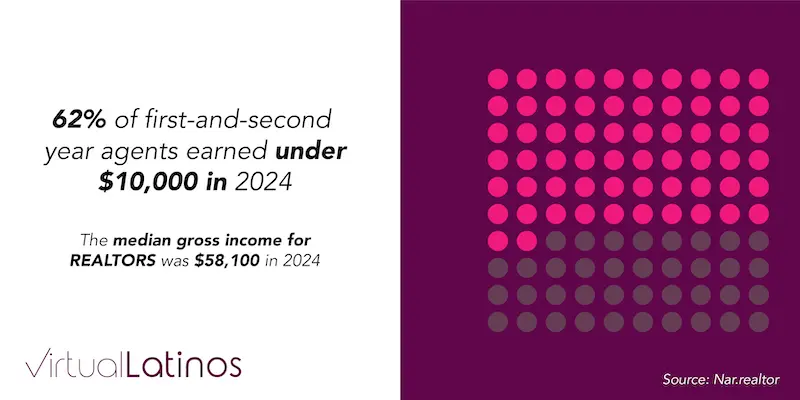
The upside is real, but the ramp is too: Realtors median gross income reached $58,100 in 2024, while 62% of first- and second-year agents earned under $10,000, which shows that systems, consistency, and support matter more than hype.
Because speed and follow-through turn curiosity into closings, responding to online leads quickly increases qualification odds significantly, so bring in a trained VA to guard your inbox, CRM, and calendar from day one.
This blog will show you how to build that leveraged operating system with bilingual, pre-vetted VAs so you can scale your pipeline, protect your time, and make a smarter decision about the leap.
Become a Real Estate Agent: Is It Worth It?
Leaving a steady six-figure role for real estate can be a smart move, but only if you understand both sides of the ledger.
Here’s a clear, no-fluff look at what draws people in and what trips many up.
The upside (and why people leave six-figure roles anyway)
- Ownership & upside. In real estate, your ceiling is higher than your salary band. Top agents, teams, and investors mix agent commissions with rentals, flips, and JV deals. That portfolio mindset beats a single W-2 income stream.
- Flexible schedule (when you build systems).
The promise of flexibility is real, but only when you operationalize outreach, showings, contracts, and follow-ups. Otherwise, “flexible” becomes always on. - Transferable skills. Sales, negotiation, PM, data wrangling, content, analytics, your corporate skills port nicely into the real estate industry.
The hard truths (no sugarcoating)
- Income volatility. Median REALTOR® gross income across the U.S. was $58,100 in 2024 (up from $55,800 in 2023), and 62% of new agents earned under $10,000, experience drives earnings. Translation: your first 12–18 months can be lean unless you have runway and systems.
- Long ramp, heavy ops. Real pipeline means consistent prospecting, nurturing, and relentless follow-up. Without help, agents drown in admin.
- Market cycles. Inventory, rates, and affordability shift. In 2025, affordability remains tight for many buyers, even $100k households can afford only about a third of listings, so your positioning and niche matter.
It’s worth it if you build a business, not a job, design leverage from day one and let systems carry the weight when the market doesn’t.
What’s the actual income potential, and how fast can you get there?
Income in real estate can scale far beyond a salary band, but the early months test your runway and your systems.
This section grounds expectations with credible benchmarks and shows how leverage (especially VAs) compresses your ramp.
What do credible benchmarks say?
- Median vs. top quartile. The median REALTOR® number tells you risk, not ceiling.
Veterans (16+ years) earn much more than rookies because repeat/referral flywheels kick in over time. - Your ramp math. Model your first year on activities, not GCI dreams:
- 5–10 new conversations daily
- 2–3 nurtures/day moved forward
- 1–2 appointments/week
- 1–3 closed deals/quarter after month 4–6
How do VAs improve the ramp?
Hand off non-revenue tasks early. The cost of a trained, bilingual VA is a fraction of one lost deal, and it buys you back hours for showings, negotiations, and listing acquisition.
On platforms like Upwork alone 830,000+ businesses used remote talent in 2024, outsourcing is mainstream, not a hack.
Real Estate vs. Remote Work Trends: Where’s the wind?
Remote isn’t a fad, it’s the operating system of modern work.
As ~26% of paid U.S. workdays remained remote in early 2025 and hybrid stays durable, clients expect slick, digital-first touchpoints and fast responses.
That expectation is your permission slip to run a fully remote, VA-supported real estate operation across time zones.
Remote is normalizing workdays were remote in early 2025, and hybrid remains a durable norm for talent strategy.
That means clients and teams expect digital-first experiences, from Calendly links to virtual showings, opening the door for fully remote real estate agent operations supported by VAs across time zones.
Even as some firms push stricter office days, the broader trend is a stable hybrid middle; employers keep flexibility to compete for talent.
If you’re ready to align with how clients work today, plug in bilingual, pre-vetted VAs through Virtual Latinos to power scheduling, lead intake, marketing, and transaction support, so your remote model feels seamless to every buyer, seller, and partner.

What business model should new agents choose (and how do VAs fit in)?
Your model determines your calendar, your stress level, and your ceiling.
Pick the structure that matches your goals, then add the right leverage so your time stays in revenue moments.
If I’m a solo agent, how do I structure my week?
Time blocks
- AM (Hunting): Prospecting (FSBOs, expireds), sphere outreach, agent-to-agent referrals, investor calls.
- Midday (Service): Showings, CMAs, listing prep, vendor coordination.
- PM (Marketing): Content (market updates, neighborhood tours, shorts), email follow-ups, offer negotiation.
VA support (sample delegation)
- Inbox triage; CRM hygiene; appointment setting
- List-building (absentee owners, landlords, small multifamily owners)
- Social repurposing (Reels/Shorts captions, thumbnails)
- Transaction coordination checklists; doc collection
- Post-close nurture (anniversary emails, review requests, referral asks)
If I’m a team lead, what’s my leverage stack?
- ISA/OSA VA pod (inbound lead response <5 min; outbound prospecting)
- Marketing VA (ads + content calendar + SEO basics)
- TC VA (contingency timelines, inspection scheduling, lender/title coordination)
- Investor VA (deal screening, rent comps, NOI pro formas)
Solo or team, the winning model is the one that protects focus: you handle high-trust conversations and negotiations while well-documented processes and VA roles keep the engine running.
Remote hiring trends and hybrid norms simply make that setup the new standard.
Which niches convert fastest (and how do VAs help)?
Not every client segment moves at the same speed.
Pick a niche with clear pain points and repeatable workflows, then align your content and operations so each touch nudges prospects toward a decision.
First-time buyers (education engine)
- Content: Down-payment myths, payment scenarios.
- VA tasks: Clip longform into short vertical video; schedule Q&A lives; nurture email series.
Move-up sellers (listing leverage)
- Content: Net sheet breakdowns, “sell-before-you-buy” options.
- VA tasks: Pre-listing packet creation; vendor coordination; price-reduction playbooks.
Investors (repeatable, data-driven deals)
- Content: Cap rates, cash-on-cash, financing stacks.
- VA tasks: Build deal spreadsheets; scrape/organize listings; schedule showings by route.
The fastest-converting niches share a rhythm: specific questions, predictable objections, and content plus ops that answer both, consistently.
How does the real estate industry outlook affect my bet?
Demand for skilled agents hasn’t disappeared with cooler markets, it’s shifted toward those who educate well and run tight operations.
Even in cooler markets, 90% of home sellers used an agent in 2024, consumer reliance on professionals remains high.
That’s durable demand for agents who communicate clearly and execute flawlessly.
At the same time, affordability constraints require sharper positioning and better client education.
Agents who ship weekly market content and deliver white-glove ops (often via VAs) become the obvious choice in their ZIP codes.
Authority now comes from consistent teaching and seamless execution; do both and you stay indispensable through any cycle.

FAQ
What skills do you need to become a VA for real estate teams?
Strong English/Spanish communication, CRM literacy (Follow Up Boss, KVCORE, HubSpot), appointment setting, light copy and design (Canva), spreadsheet comfort, and discipline with SLAs.
Familiarity with MLS workflows, disclosures, and contingency timelines is a plus. Virtual Latinos trains candidates on these real-estate-specific workflows.
Can I work as a VA without a degree?
Absolutely. U.S. companies care more about reliability, communication, and outcomes than diplomas. The broader market for freelancers and remote pros keeps expanding; platforms report massive business adoption of independent talent. Upwork+1
Where can I find remote VA jobs or hire VAs?
- Candidates: Apply with Virtual Latinos (Latin America-based roles for U.S. clients), and build profiles on reputable marketplaces.
- Business owners: Post roles on LinkedIn Jobs (thousands of virtual assistant postings exist at any time) and interview through Virtual Latinos to speed up shortlisting and quality control.
Should you leave a six-figure job to become a real estate agent?
Before you trade a steady six-figure paycheck for commissions, ground the decision in operations, not adrenaline, real estate pays operators, not tourists.
Should you leave a six-figure job to become a real estate agent? Yes, if you’re ready to be an operator.
Real estate rewards those who build systems, publish consistently, and stay in the conversation daily.
The income potential is real; the ramp is realer. Your shortcut isn’t hustle alone, it’s leverage: a clear niche, a measured pipeline, and a trained VA who keeps your engine running while you do the high-trust work only you can do.
Remote work has normalized distributed teams and client expectations. That’s great news for agents and brokerages willing to run a modern playbook.
Treat this leap like a business launch: protect your time, document your processes, and plug in reliable support.
Bilingual, pre-vetted VAs from Virtual Latinos fit neatly into that operating system, so your focus stays on conversations, negotiations, and closings.
The Verdict: Turn the Leap into a Plan
Real estate can outgrow a six-figure salary if you operate like a business owner, clear niche, measurable pipeline, disciplined follow-up, and leverage through systems and people.
Market cycles, affordability, and a long ramp won’t derail you when your calendar is guarded, your CRM is clean, and your outreach is consistent.
Do the high-trust work only you can do and let well-documented processes and the right VA support carry the rest.
Become a Real Estate Agent: Is It Worth It? If you’re ready to make a smart, de-risked jump, or to scale the machine you’ve already built, partner with Virtual Latinos to match with bilingual, pre-vetted VAs for lead intake, marketing, and transaction support.