
How to Build a Strong Company Culture when your team works from different countries, time zones, and cultural backgrounds? It’s not only possible—it’s one of the most powerful assets your business can build.
In a remote work environment, culture becomes more than just a buzzword. It’s the invisible thread that ties your team together beyond Zoom calls and deadlines.
It’s what drives loyalty, fosters collaboration, and fuels long-term results—even when your team members have never shared the same physical space.
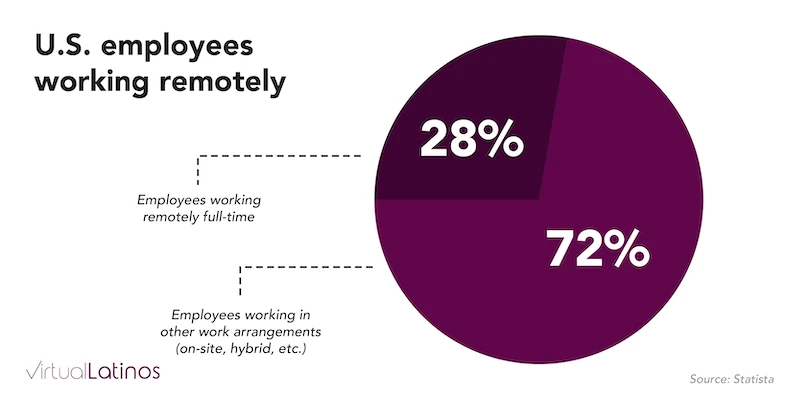
And this matters now more than ever. According to Statista, as of 2024, over 28% of U.S. employees work remotely full-time—a number expected to keep rising.
For small and medium-sized business owners, this shift presents a unique opportunity: to tap into diverse, skilled remote talent across Latin America through platforms like Virtual Latinos.
But here’s the key: hiring remotely is only the first step. Building a strong company culture is what transforms a distributed team into a high-performing one.
In this article, we’ll show you how to do exactly that—with practical tips, real-world examples, and proven strategies that other successful business owners are already using to build thriving, connected remote teams.
Why Is Leadership Transparency Essential in Remote Work Culture?
In remote working environments, silence often feels like uncertainty. Without access to in-person interactions, hallway updates, or the general energy of a physical office, remote employees can easily feel disconnected or misinformed.
In this context, leadership transparency is not just helpful—it is essential for maintaining a healthy and aligned workplace culture.
Here’s why transparency is a critical pillar of remote work culture, and how leaders can foster it:
1. Transparency provides direction in remote teams
In physical offices, employees often pick up cues through spontaneous conversations or informal feedback.
But in a remote work environment, these signals disappear. That’s why clear, proactive communication from leadership is vital. It ensures all team members—no matter where they work—understand the “why” behind decisions, strategic shifts, and performance targets.
Harvard Business Review notes that during times of uncertainty, frequent and transparent communication builds psychological safety and trust.
2. All-hands meetings foster personal-level connection
Even in a remote context, leaders can cultivate a personal level of connection through structured, company-wide conversations.
Best practices:
- Include time for open Q&A and personal stories.
- Rotate who presents so different functions have a voice.
- Record sessions for remote workers in other time zones.
3. Document decisions asynchronously for full visibility
For remote employees, asynchronous documentation replaces office whiteboards or quick check-ins.
Leaders must ensure that key decisions, process updates, and project milestones are documented and accessible to everyone—especially those in different time zones.
Tactics:
- Use tools like Notion or Confluence to create living documentation.
- Record short Loom videos to explain key decisions.
- Maintain changelogs and shared OKR boards.
Remote teams rely on asynchronous communication and documentation to stay aligned. Without written records, important context is lost and collaboration across time zones becomes difficult.
4. Be honest about business performance
In a healthy remote work culture, leaders do not shy away from sharing the full picture—including performance metrics, financial forecasts, or customer feedback.
This fosters trust and accountability among remote team members and reduces speculation or misinformation.
According to Gallup, employees who feel informed about their organization’s health are significantly more engaged and loyal.

5. Invite and act on feedback from remote employees
Transparency isn’t just top-down. It includes listening and responding to concerns, ideas, and feedback from across the organization. Simple peer recognition, supported through kudos software, can reinforce this openness by making appreciation and feedback visible even when teams work remotely.
In remote working setups, leaders should create safe, structured spaces for feedback—and importantly, close the loop with visible actions.
Tools and ideas:
- Anonymous surveys or suggestion boxes.
- Ask Me Anything (AMA) sessions.
- Share “You said, we did” updates to show responsiveness.
McKinsey research shows that organizations that regularly act on employee feedback enjoy higher retention and stronger team trust.
Building a strong culture starts with trust
In remote teams, trust is the infrastructure that replaces walls and office hours. It is built through honest communication, visible decision-making, and accessible leadership.
When leaders prioritize transparency, they enable every team member to feel included, informed, and confident in their role—regardless of geography.
What Does Company Culture Look Like in a Fully Remote Environment?
Company culture is no longer defined by on-site perks like ping-pong tables or stocked snack bars.
In a virtual workplace, company culture becomes more intentional. It’s built through deliberate actions and rituals that foster inclusion, engagement, and purpose across geographic boundaries.
Here’s what a healthy and effective remote culture looks like:
Clear communication and mutual trust
Successful remote teams rely on transparent, asynchronous, and empathetic communication. Since remote work eliminates non-verbal cues and hallway conversations, it’s critical to prioritize clarity, documentation, and psychological safety.
Companies like GitLab and Buffer—both fully remote pioneers—emphasize written communication standards and knowledge sharing to maintain alignment GitLab Handbook.
Trust, meanwhile, becomes the invisible glue. It empowers employees to manage their own time, take initiative, and collaborate without micromanagement.
According to a 2022 Gallup report, trust in leadership directly correlates with higher engagement and lower burnout in remote teams.
Shared values and a clear mission
In remote environments, values aren’t just written on the website—they’re lived daily. Companies with strong remote cultures embed their mission into everything from onboarding to decision-making processes.
When individuals feel aligned with a larger purpose, they are more motivated and resilient—even when working independently.
Opportunities for growth and feedback
Remote organizations thrive when they create structured opportunities for professional development, continuous learning, and regular feedback loops.
Virtual mentorship programs, clear career ladders, and frequent check-ins help team members feel seen and supported.
As per McKinsey, 41% of employees in remote roles consider development opportunities a key factor in job satisfaction.
Healthy work-life balance
Burnout is a real risk in remote work. That’s why top-performing remote cultures encourage flexibility, boundaries, and recharge time.
Initiatives like “no-meeting Fridays,” mental health days, and time-zone–friendly collaboration practices are essential.
Research by Microsoft’s Work Trend Index shows that productivity has increased in remote setups, but so have exhaustion and digital overload—making balance more important than ever.
Personal connections across teams
Fostering human connection in a distributed environment requires creativity. Virtual coffee chats, social Slack channels, and shared rituals (like weekly wins or team shoutouts) help team members bond beyond work tasks.
Leaders who invest in emotional intelligence and vulnerability create cultures where people feel valued, not just employed.
Remote work culture is how people feel aligned, connected, and empowered—even when they’re never in the same room.
It requires intention, clarity, and care. In distributed environments, culture is not what happens when people bump into each other—it’s what happens when they don’t.

How Do You Create Real Connection With Remote Employees?
Absolutely. And you should. When working remotely, intentionally building personal connections is a must—not a nice-to-have.
Here’s how to do it:
- Daily check-ins and “coffee chats”: Create time in your week for casual, non-work-related conversations.
- Celebrate wins (big or small): From project milestones to birthdays—acknowledge and celebrate everything.
- Encourage video calls: Faces build familiarity. Video adds a human touch that Slack and email can’t replicate.
- Virtual team-building activities: Host trivia nights, cultural exchange sessions, or even remote cooking classes.
These simple gestures go a long way in making remote employees feel seen, valued, and connected on a personal level.
What Tools Help Foster a Strong Remote Team Culture?
You don’t need a fancy tech stack—but the right tools can make a big difference in how your culture is experienced remotely.
Top tools used by remote-first companies:
- Slack – For real-time communication and informal channels (e.g., #wins, #random, #gratitude).
- Loom – To send video updates and personalized messages.
- Notion or ClickUp – For shared knowledge bases and async collaboration.
- Donut (Slack app) – Randomly pairs team members for virtual coffee chats.
- Kudos tools like Bonusly or Nectar – Let team members recognize and reward each other.
Using the right tools helps remote employees feel connected, aligned, and part of something bigger. In addition, incorporating an online testing program can support fair hiring and ongoing skill development, ensuring that remote team members are matched to the right roles and given clear growth opportunities.
How do you reinforce values and mission in a virtual workplace?
Your company values shouldn’t just live in your handbook—they should be reflected in your daily operations and conversations.
Ways to reinforce your mission and values remotely:
- Start meetings with a mission moment: Share a story or client win that ties back to your company’s purpose.
- Hire based on values, not just skills.
- Promote from within: Recognize team members who consistently live the values.
- Create a “values award” that’s peer-nominated.
At Virtual Latinos, for example, we see how clients thrive when they hire virtual professionals who align with their core values—not just their job descriptions.
What Are the Benefits of a Strong Culture in Remote Working Environments?
A strong workplace culture—especially in a remote work environment—is more than just a “nice to have.” It’s a core foundation for long-term success.
By promoting transparency, encouraging feedback, and aligning on shared values, organizations can ensure that even fully distributed remote teams maintain cohesion and high performance.
A well-defined remote culture leads to:
- Higher retention rates.
- More engaged team members.
- Better collaboration across time zones.
- Increased productivity and innovation.
- Positive brand reputation and talent attraction.
Companies that invest intentionally in remote working culture don’t just improve internal dynamics—they see real business returns.
FAQ Section
What is the best way to onboard remote employees?
- Provide a clear onboarding schedule with goals and milestones.
- Assign a buddy or mentor to guide them.
- Include virtual meet-and-greets with other departments.
- Share culture docs, videos, and expectations early on.
Can I build company culture with part-time or freelance remote workers?
Yes! Culture isn’t about contracts—it’s about inclusion. Make freelancers or part-timers feel like part of the team by inviting them to meetings, recognizing their contributions, and sharing your mission and values with them.
How do I measure the strength of my remote culture?
Track these indicators:
- Team engagement scores.
- Employee retention and referral rates.
- Participation in team-building events.
- Feedback from surveys and reviews.
Ready to Build a Remote Team That Actually Works? Start With Culture
Building a strong company culture in a fully remote team doesn’t happen overnight—but with intention, empathy, and consistency, it’s absolutely possible.
At Virtual Latinos, we help U.S.-based companies go beyond hiring—we help them build remote teams that stick, perform, and grow.
Whether you’re just getting started with virtual assistants or scaling your operations, the secret to long-term success is knowing how to build a strong company culture that works across borders, time zones, and cultures.
Want to learn how to build a strong company culture in your remote team? Let’s talk about how our Latin American professionals can help you create a culture-driven, high-performing team.